Neck Pain, Stiffness & Pinched Nerves: Can Acupuncture Help?
5 min read
Neck pain is a common problem among people who spend long hours working at a computer, driving, or looking down at their phones. Symptoms may range from mild stiffness to persistent neck and shoulder pain, headaches, or numbness extending into the arm. While cervical disc problems and age-related changes can contribute to neck pain, muscle tension, inflammation, and increased sensitivity in the nervous system also play important roles. At Komfy Acupuncture in Bellevue, treatment focuses on these different pain mechanisms rather than imaging findings alone. Acupuncture, electroacupuncture, targeted trigger-point treatment, PIT, and individualized herbal medicine may be considered depending on the patient's condition. Recent clinical research provides encouraging evidence for acupuncture and electroacupuncture in managing certain types of chronic neck pain.
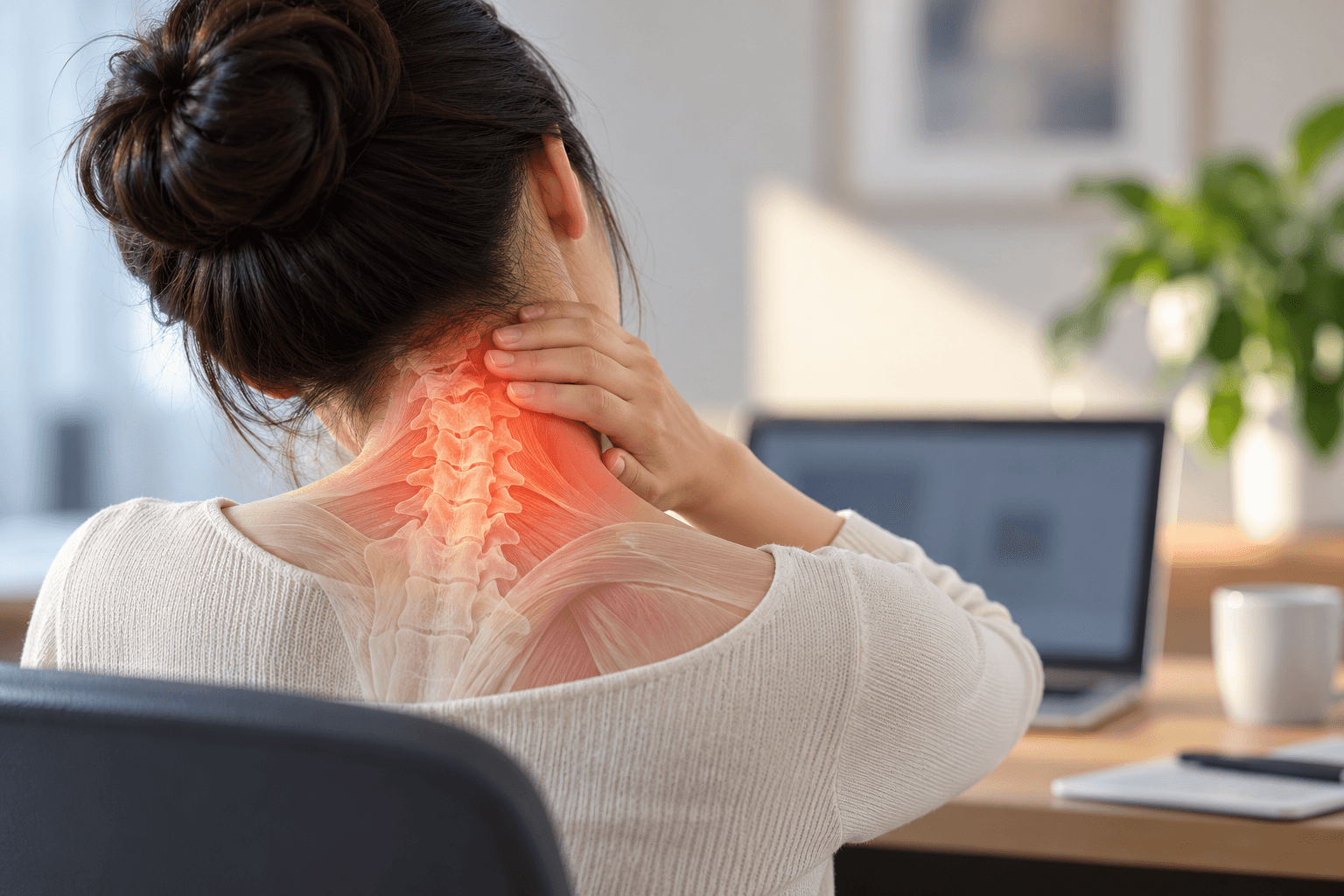
Neck pain is one of the most common musculoskeletal complaints, particularly among people who spend long hours working at a computer, driving, or looking down at their phones. Symptoms may begin as mild stiffness but can develop into persistent neck pain, shoulder tightness, headaches, or pain extending into the arm.
Acupuncture may help relieve certain types of neck pain, particularly chronic or recurring pain involving muscle tension and myofascial dysfunction. Clinical research also suggests that electroacupuncture may improve pain and neck-related disability in some patients.
At Komfy Acupuncture in Bellevue, Washington, treatment focuses on identifying the different factors contributing to neck pain rather than treating every stiff neck in the same way.
What Causes Neck Pain and Stiffness?
Neck pain can originate from several structures, including muscles, joints, intervertebral discs, and nerves.
Common contributing factors include:
Muscle tension and trigger points: Tight upper trapezius, levator scapulae, and cervical muscles can cause localized pain or referred pain into the shoulders and head.
Prolonged static posture: Working at a desk or maintaining the same neck position for extended periods may aggravate muscle fatigue and stiffness.
Cervical disc problems: A bulging or herniated cervical disc may irritate nearby nerve roots and produce pain, tingling, or numbness extending into the arm.
Cervical spondylosis: Age-related changes in cervical discs and joints can contribute to stiffness, restricted movement, and sometimes nerve irritation.
Stress and poor sleep: Increased muscle guarding and altered pain sensitivity can make existing neck pain feel more intense.
Importantly, neck pain is not always explained by structural abnormalities.
Two patients with similar MRI findings may experience very different symptoms. One may have severe muscle tension, while another has nerve irritation or increased sensitivity within the pain-processing system.
This is why treatment should focus on the patient's symptoms, examination findings, and functional limitations—not imaging results alone.
Does Acupuncture Really Help Neck Pain?
Research suggests that acupuncture can be a useful nonpharmacological option for certain patients with neck pain.
The National Institutes of Health (NIH), through its National Center for Complementary and Integrative Health (NCCIH), reports that acupuncture may provide better pain relief than no treatment for neck pain.
Research comparing acupuncture with sham acupuncture has produced more variable results, suggesting that treatment benefits may involve several mechanisms beyond needle placement alone.
Acupuncture may influence pain signaling in the nervous system, reduce muscle-related discomfort, and improve tolerance for movement.
For patients with chronic neck pain, these effects may be particularly relevant when persistent muscle guarding and pain sensitivity contribute to symptoms.
Electroacupuncture for Chronic Neck Pain: What Does Research Show?
Electroacupuncture combines traditional acupuncture needles with a gentle electrical current to provide repeated stimulation to selected tissues.
A 2025 randomized clinical trial, published in the Journal of Pain Research, investigated electroacupuncture in patients with chronic neck pain.
The study analyzed 98 participants assigned to electroacupuncture, sham electroacupuncture, or a waiting-list control group.
After 10 treatment sessions, researchers found that:
Electroacupuncture produced greater improvements in neck-related disability than sham electroacupuncture.
Improvements were also observed in pain-related outcomes.
Benefits in the primary disability measure remained significant at the three-month follow-up.
Although this was a relatively small, single-center study, its findings suggest that electroacupuncture may offer additional benefits for some patients with chronic neck pain.
At Komfy Acupuncture, electroacupuncture may be considered when patients experience persistent muscle tension, recurrent stiffness, or chronic neck pain that has not responded sufficiently to simpler approaches.
Treatment intensity is adjusted according to each patient's symptoms and tolerance.
What If Neck Pain Travels Into the Shoulder or Arm?
Neck pain accompanied by arm symptoms requires particular attention.
When a cervical nerve root becomes irritated or compressed, patients may experience:
Pain radiating from the neck into the shoulder or arm
Tingling or numbness in the fingers
Burning or electric-like sensations
Weakness in the arm or hand
These symptoms may indicate cervical radiculopathy, commonly called a pinched nerve.
However, not every case of shoulder or arm pain originates from a cervical disc. Muscles and other structures can also produce referred pain.
Acupuncture may help manage associated muscle tension and discomfort, but it cannot be assumed to remove structural nerve compression or reverse disc degeneration.
Patients with persistent neurological symptoms should receive appropriate medical evaluation, especially if weakness is present.
How We Approach Neck Pain at Komfy Acupuncture
At Komfy Acupuncture in Bellevue, treatment is individualized according to the patient's pain pattern, duration of symptoms, movement restrictions, and associated neurological findings.
Depending on the clinical presentation, treatment may include:
Acupuncture and electroacupuncture: Used to address pain modulation, muscular discomfort, and movement-related symptoms.
Cupping therapy: May be incorporated for selected patients with myofascial tightness, although evidence for sustained neck-pain relief remains limited.
Trigger-point treatment and PIT (Point Injection Therapy): May be considered when examination identifies an appropriate myofascial component. These treatments are not intended to correct a herniated disc or directly reverse nerve compression.
Individualized herbal medicine: May be considered as an adjunct based on the patient's broader clinical presentation, although evidence for treating mechanical neck pain remains limited.
Not every patient requires all these treatments. The goal is to select appropriate methods based on the most likely contributors to the pain.
What Can You Do at Home for Neck Pain?
For uncomplicated neck pain, simple daily habits can support recovery.
Change positions regularly rather than maintaining one posture for hours.
Perform gentle neck movements within a comfortable range.
Apply heat or cold when it helps relieve discomfort.
Adjust your computer monitor and workspace to reduce sustained neck strain.
Maintain regular physical activity as tolerated.
Most episodes of uncomplicated neck pain improve over time. However, symptoms that persist for several weeks or repeatedly return deserve further evaluation.
Seek prompt medical attention for new or progressive arm or leg weakness, problems with balance or walking, or significant neurological symptoms. Severe neck pain following trauma, or neck stiffness accompanied by fever and a severe headache, may require emergency care.
Frequently Asked Questions About Neck Pain and Acupuncture
Can acupuncture help a stiff neck?
Yes, acupuncture may help reduce pain and discomfort associated with muscle tension and certain types of mechanical neck pain. Results vary depending on the underlying cause and duration of symptoms.
Can acupuncture treat a pinched nerve in the neck?
Acupuncture may help manage some associated pain and muscle tension, but it does not physically remove a herniated disc or guarantee relief from nerve compression. Persistent numbness or weakness requires medical assessment.
How many acupuncture sessions are needed for neck pain?
There is no single treatment schedule that works for everyone. Recent symptoms may respond differently from chronic or recurrent pain. Treatment frequency and progress should be reassessed based on symptom changes and functional improvement.
Does health insurance cover acupuncture for neck pain?
Many insurance plans offer acupuncture benefits, but coverage depends on the specific plan, diagnosis, network status, deductibles, copays, and visit limits. Komfy Acupuncture can help patients review their benefits before scheduling.
Neck Pain Treatment in Bellevue, WA
Neck pain can involve more than tight muscles. Joint irritation, nerve involvement, persistent muscle guarding, and changes in pain sensitivity may all influence how symptoms develop and respond to treatment.
At Komfy Acupuncture in Bellevue, our approach combines clinical assessment with individualized treatment options, including acupuncture, electroacupuncture, and other appropriate therapies.
The goal is to reduce discomfort, improve movement, and help patients return to their normal daily activities.
If you are experiencing persistent neck stiffness, shoulder tension, or recurring neck pain, contact us to discuss your symptoms and available treatment options.
Komfy Acupuncture
14575 NE Bel Red Rd #100, Bellevue, WA 98007
Phone: (425) 818-0979
Learn more about our Neck & Shoulder Pain treatments
References
National Center for Complementary and Integrative Health (NCCIH). Acupuncture: Effectiveness and Safety. National Institutes of Health. Read the evidence overview.
Li W, et al. Clinical Efficacy of Electroacupuncture in the Treatment of Chronic Neck Pain: A Randomized Clinical Trial. Journal of Pain Research. 2025;18:2909–2922. PubMed.
National Health Service (NHS). Neck Pain. Patient guidance on symptoms, causes, self-care, and when to seek medical attention. NHS guidance.
This article is intended for general educational purposes and does not replace individualized medical evaluation or treatment.