4 Common Myths About IBS (Irritable Bowel Syndrome) — What Patients in Washington (WA) Should Know
3 min read
Irritable bowel syndrome (IBS) affects millions of people and is one of the most common gastrointestinal conditions seen in clinical practice. Patients searching for “IBS treatment in Washington,” “why do I always have stomach problems,” or “natural IBS relief” are often overwhelmed by conflicting information online. Because IBS symptoms fluctuate based on stress, diet, sleep, and nervous system sensitivity, many myths and oversimplified treatment claims continue to circulate. While some strategies can genuinely help certain patients, others may worsen symptoms depending on the subtype of IBS involved. Understanding how IBS actually works can help patients make safer and more effective decisions for long-term symptom management and quality of life.
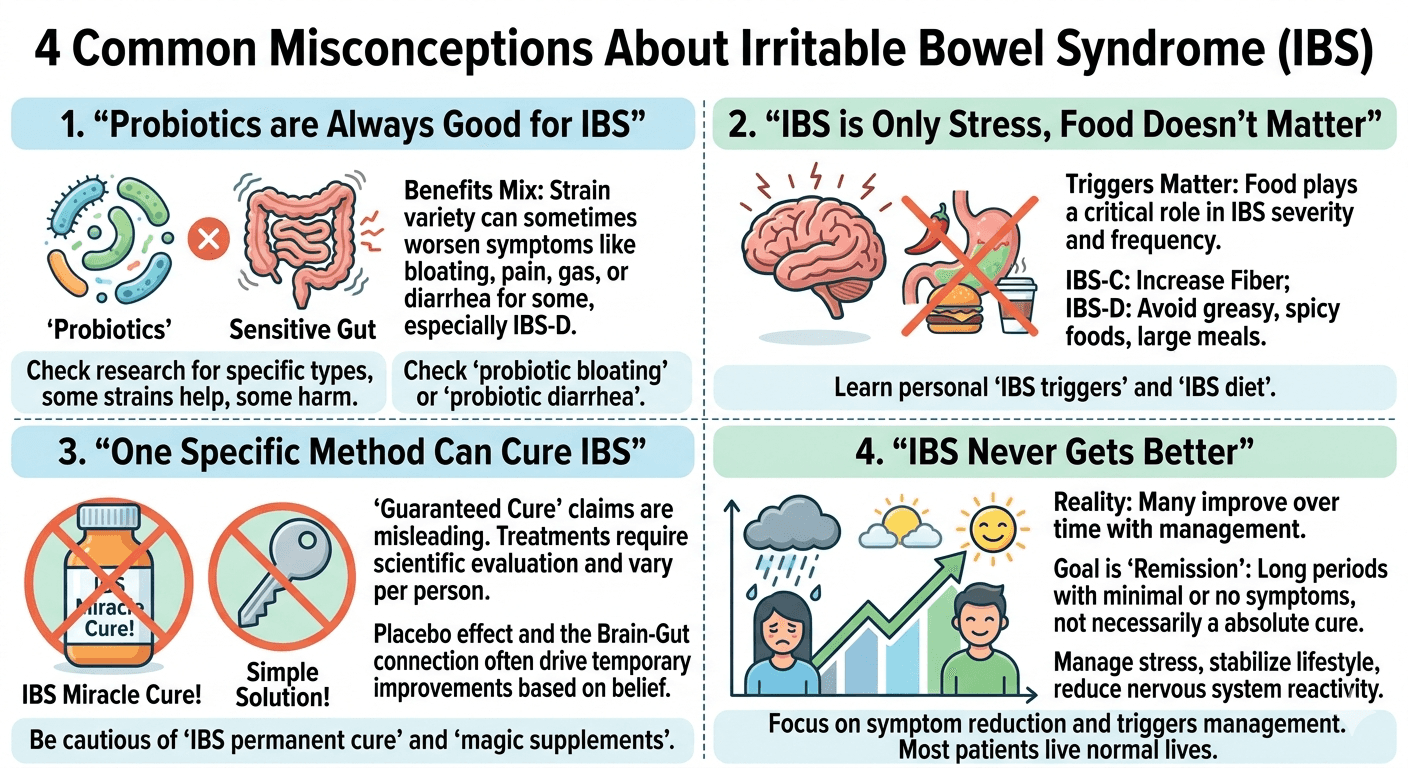
4 Common Misconceptions About Irritable Bowel Syndrome (IBS)
1. “Probiotics Are Always Good for IBS”
When people think about gut health, probiotics are usually one of the first things that come to mind.
Whether discussing:
Live probiotics
Heat-killed probiotics
Different bacterial strains
it is true that improving the gut microbiome can potentially benefit digestive health.
However, changing the intestinal microbiome artificially does not always help every IBS patient.
Patients searching for:
“best probiotics for IBS”
“probiotics made my IBS worse”
“IBS bloating after probiotics”
may actually experience worsening symptoms during changes in gut bacteria balance.
Possible symptoms include:
Increased bloating
Abdominal pain
Excess gas
Worsening diarrhea
Current research supporting probiotics for IBS remains mixed and inconsistent.
For some patients with:
IBS-C (constipation-predominant IBS)
Mixed-type IBS
certain probiotics may help.
However, patients with:
IBS-D (diarrhea-predominant IBS)
should be more cautious, because probiotics may sometimes create more harm than benefit.
2. “IBS Is Just Stress-Related, So Food Doesn’t Matter”
Absolutely not.
Although IBS is strongly influenced by:
Stress
Anxiety
Nervous system sensitivity
food still plays a major role in symptom severity and flare frequency.
Patients searching for:
“foods that trigger IBS”
“IBS diet”
“what should I eat with IBS”
often notice strong relationships between symptoms and diet.
Examples include:
For IBS-C (Constipation-Predominant IBS)
Higher fiber intake may significantly improve bowel function.
For IBS-D (Diarrhea-Predominant IBS)
Certain foods commonly worsen symptoms, including:
Greasy foods
Spicy foods
Heavy meals
These relationships are well supported in clinical research and everyday practice.
Finding an individualized diet that works for your body can make a major difference in IBS management.
3. “You Can Completely Cure IBS with This One Special Method”
Many people suffer from IBS, so naturally there are endless claims online about miracle cures.
Patients frequently search for:
“how to cure IBS permanently”
“one simple trick for IBS”
“supplements that cure IBS”
The reality is that almost every proposed IBS treatment eventually undergoes scientific evaluation — and very few turn out to be consistently effective for everyone.
So why do so many “miracle IBS treatments” continue spreading online?
One major reason is that IBS symptoms are highly connected to the brain-gut axis and emotional state.
Even when a treatment has little direct physiological effect, if someone strongly believes:
“this cured my IBS”
the psychological reassurance alone may temporarily reduce symptoms.
This placebo-related improvement is very real, which is why misleading success stories spread so easily.
If a truly reliable cure for IBS is discovered, I would gladly recommend it myself.
4. “IBS Never Gets Better”
Fortunately, this is also not true.
While IBS can certainly become chronic, many people gradually improve over time, especially as:
Stress decreases
Lifestyle stabilizes
The nervous system becomes less reactive
In many cases, the realistic goal is not immediate permanent cure, but maintaining long periods of remission.
What Is Remission?
Remission means:
The condition is not technically cured
But symptoms become minimal or absent for extended periods of time
In practical terms, successful IBS management often means:
Reducing symptom frequency
Lowering flare severity
Managing flare-ups effectively when they occur
Many patients are able to live normal daily lives once they learn how to control triggers and maintain symptom stability.