IBS Treatment Success Story : Anxiety, Urgency, and Bus Ride-Triggered Diarrhea Recovery
5 min read
Irritable bowel syndrome (IBS) can affect far more than digestion alone. Many patients searching for “IBS treatment in Washington,” “anxiety-related diarrhea,” or “urgent bowel movements while driving” struggle with symptoms that interfere with commuting, work, travel, and everyday life. One of the most distressing patterns is the sudden urge to use the bathroom when riding in a car, bus, or other situation where restroom access feels uncertain. In many cases, stress sensitivity, autonomic nervous system imbalance, diet, and gut health all interact together. This case study highlights how a combination of acupuncture, Herb medicine, nutrition support, stress regulation, and gut-focused care helped improve chronic IBS symptoms and restore quality of life over time.
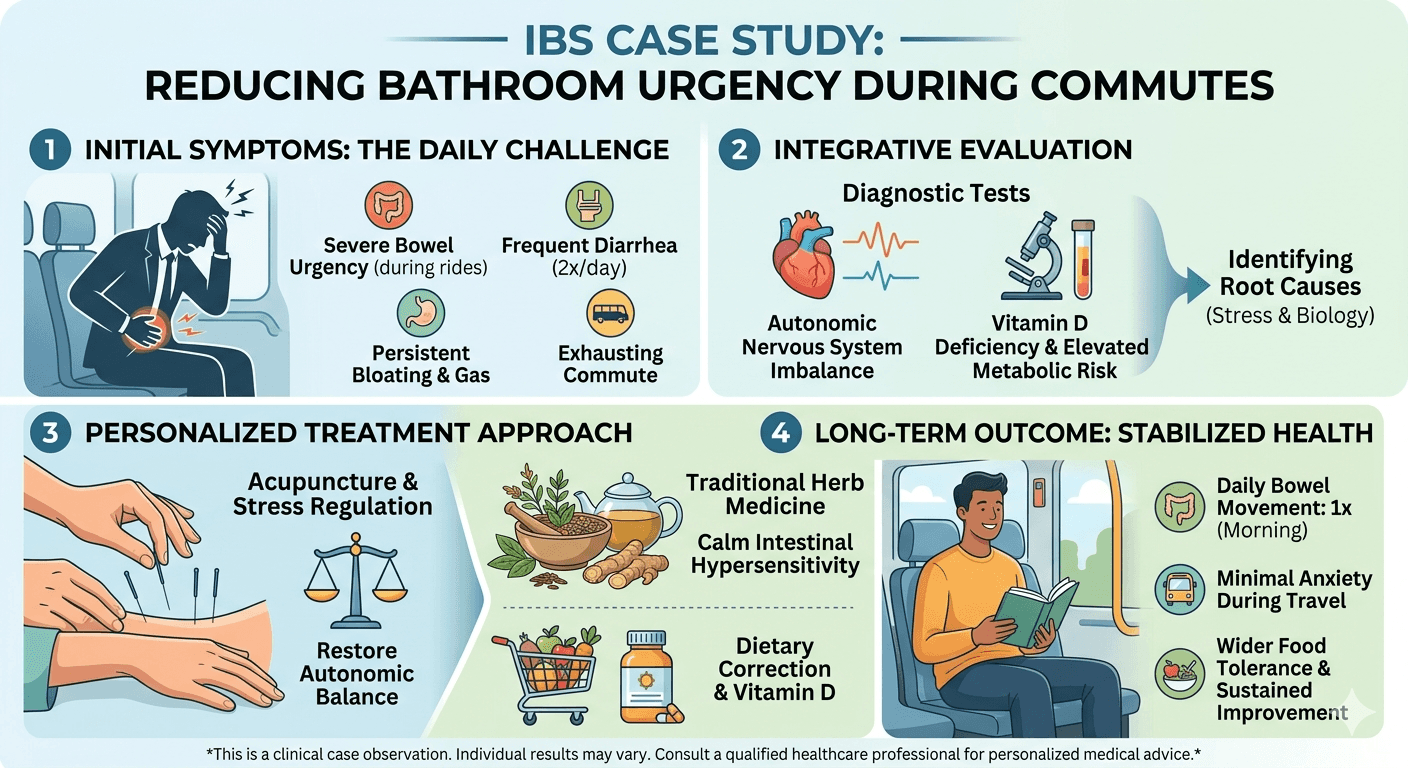
IBS Case Study: Severe Bathroom Urgency During Bus Rides Improved with Acupuncture and Herb Medicine
One of the most common symptoms seen in patients with irritable bowel syndrome (IBS) is the sudden urge to use the bathroom whenever they get into a car or bus.
Patients with this pattern are often:
Long-distance commuters
Drivers
Frequent business travelers
This particular patient came to the clinic because every time they rode the bus, they felt overwhelming bowel urgency. Since they had to commute approximately two hours round-trip every day, the symptoms had become physically and emotionally exhausting.
The patient reported needing to use the restroom:
Immediately before getting on the bus
Again immediately after getting off
every single day.
Initial Symptoms
At the first visit, symptoms included:
Sudden, difficult-to-control bowel urgency during bus rides
Diarrhea approximately twice daily
A persistent sensation of incomplete bowel emptying
Spending up to 40 minutes in the bathroom
Significant bloating and gas
Frequent motion sickness symptoms
Fortunately:
There was no severe indigestion
No major acid reflux symptoms
No serious sleep disturbance
Outside of work-related stress, no major additional health issues were identified initially.
Initial Evaluation and Testing
Although the symptom pattern was highly characteristic of IBS, several tests were performed to better understand contributing factors.
Because symptoms appeared strongly influenced by stress and anxiety, HRV (heart rate variability) testing was used to evaluate:
Stress resistance
Autonomic nervous system balance
Blood testing was also performed because the patient’s dietary habits suggested elevated metabolic risk.
Since fatigue was significant, liver function testing was also included.
Test Results
Laboratory findings showed:
Mild hyperlipidemia
Normal liver function
Vitamin D deficiency
HRV testing showed:
Reduced stress resilience
Significant autonomic nervous system imbalance
This autonomic imbalance was believed to play a major role in abnormal bowel activity and IBS symptoms.
Initial Treatment Plan
Treatment focused first on restoring autonomic nervous system balance through acupuncture.
Patients searching for:
“stress related IBS”
“anxiety diarrhea treatment”
“IBS and nervous system”
often experience this same connection between stress regulation and bowel function.
As autonomic balance improves, bowel movement patterns often stabilize naturally.
To help accelerate improvement, Herb medicine was also prescribed to:
Calm intestinal hypersensitivity
Stabilize digestive function
Reduce urgency and diarrhea
Additional recommendations included:
Gradual dietary correction
Vitamin D supplementation
Vitamin D is increasingly recognized as an important factor in IBS and gut health regulation.
Follow-Up Progress
After 2 Weeks
Improvement appeared faster than expected.
The patient reported:
Reduced bowel frequency beginning only two days after starting treatment
More frequent days with only one bowel movement daily
Significant improvement in bloating and abdominal discomfort
Bus rides still caused some anxiety, but symptoms were no longer severe enough to make the patient consider getting off midway to find a restroom.
Because IBS symptoms commonly fluctuate during recovery, dietary consistency was strongly emphasized to avoid relapse.
10 Days Later
Symptoms worsened slightly after the patient relaxed dietary restrictions.
Fortunately, the setback was mild and temporary.
This pattern is very common in IBS recovery, where symptoms often improve and worsen cyclically before stabilizing long-term.
Treatment was continued without major changes.
One Month Later
After maintaining:
Dietary management
Consistent herbal treatment
for one month, symptoms improved steadily without major fluctuations.
At this point:
Bowel movements occurred once daily in the morning
Stool consistency remained somewhat loose
Abdominal discomfort had largely resolved
Bus rides no longer triggered severe bowel anxiety
The patient also noticed:
Reduced sensation of incomplete evacuation
Bathroom time decreased from 40 minutes to approximately 20 minutes
Interestingly, this improvement occurred without directly targeting the incomplete evacuation sensation itself. Instead, it appeared to improve as overall intestinal function normalized.
Partial Recovery but Ongoing Suspicion of Gut Dysbiosis
Although symptoms improved significantly, stool quality and residual bowel discomfort suggested incomplete recovery.
Persistent gut microbiome imbalance was suspected, although not formally confirmed at that stage.
Because the patient could function normally again, active treatment was paused while continuing dietary management and observation.
Relapse 7 Months Later
The patient remained stable for approximately seven months.
However, symptoms returned after taking an inappropriate supplement for about one month, which caused sudden digestive irritation.
Previous symptoms reappeared:
Anxiety during car rides
Diarrhea twice daily
Intestinal instability
This time, a more comprehensive approach was used, including an organic acid test (OAT).
Testing revealed:
Harmful bacterial overgrowth
Signs of impaired digestion and nutrient deficiency
Treatment was adjusted accordingly.
Revised Treatment Plan
The updated plan included:
Probiotic supplementation to support beneficial gut bacteria
Herb medicine aimed at suppressing harmful bacteria and improving digestion
Patients searching for:
“gut microbiome IBS”
“IBS after antibiotics”
“IBS dysbiosis treatment”
often present with similar patterns.
2 Weeks Later: Unexpected Setback
Symptoms improved somewhat, but diarrhea and car-related bowel anxiety persisted.
Further discussion revealed the patient had been taking cold medication containing antibiotics continuously for two weeks.
Because antibiotics can severely disrupt gut microbiome recovery — especially during probiotic treatment — recovery was expected to remain slower until antibiotic use ended.
Another 2 Weeks Later
After stopping the antibiotics:
Digestive symptoms improved rapidly
Diarrhea decreased significantly
Car ride tolerance improved to approximately one hour
The patient occasionally still felt bowel urgency during travel, but the sensation was no longer severe or uncontrollable.
Another 2 Weeks Later
At this stage:
Stool patterns were nearly normal
Anxiety during car rides became minimal
Daily function was largely restored
Dietary restrictions were gradually loosened.
Strict diets can help stabilize IBS temporarily, but maintaining highly restrictive eating patterns long-term may create nutritional imbalance and unnecessary food anxiety.
Foods that previously triggered symptoms were slowly reintroduced successfully.
At this point:
Herb medicine was discontinued
Ongoing lifestyle and dietary management continued independently
Long-Term Outcome
Over the following months:
Digestive symptoms remained stable
The patient tolerated a much wider variety of foods
Even heavier meals such as fried chicken no longer caused major issues
The patient ultimately maintained stable improvement without additional treatment and continues doing well today.
Final Thoughts on IBS Treatment
As this case demonstrates, IBS treatment is rarely simple.
Successful long-term recovery often requires addressing multiple factors together, including:
Acupuncture
Herb medicine
Stress regulation
Diet and nutrition
Autonomic nervous system balance
Gut microbiome health
Emotional and behavioral patterns
For many patients with chronic IBS, improving the overall regulatory balance of the body is just as important as treating digestive symptoms directly.
Previous